A Framework for Sustainable Change
Why education became the key social impact multiplier for SolarBuddy and how we used community-led initiatives to address energy poverty at scale.
By Simon Doble
I often get frustrated and feel a little out of place at big policy meetings. When the conversation goes for hours and no one wants to get to the point, I start growing restless.
I remember this feeling back in the early days, long before I founded SolarBuddy. This must have been around 2012; I was working in the humanitarian field, researching, studying and designing solar solutions and going to meetings left and right. Conferences and policy sessions from London to Brussels to Budapest
But it was getting nowhere. Talking to all these people, experts in the humanitarian field, I had to explain again and again what energy poverty was. Most didn’t have a clue.
It was there I figured we must approach it from a different angle.
That’s where the idea for SolarBuddy was born. Skipping ahead a couple of years and we were launching with our first product – the JuniorBuddy – a small portable solar-powered torch. Why this one? Because it’s what was most needed to foster learning.
And education was going to become a key tool to amplify our impact.
Raising a Community of Change: Building STEM Literacy for Energy Solutions
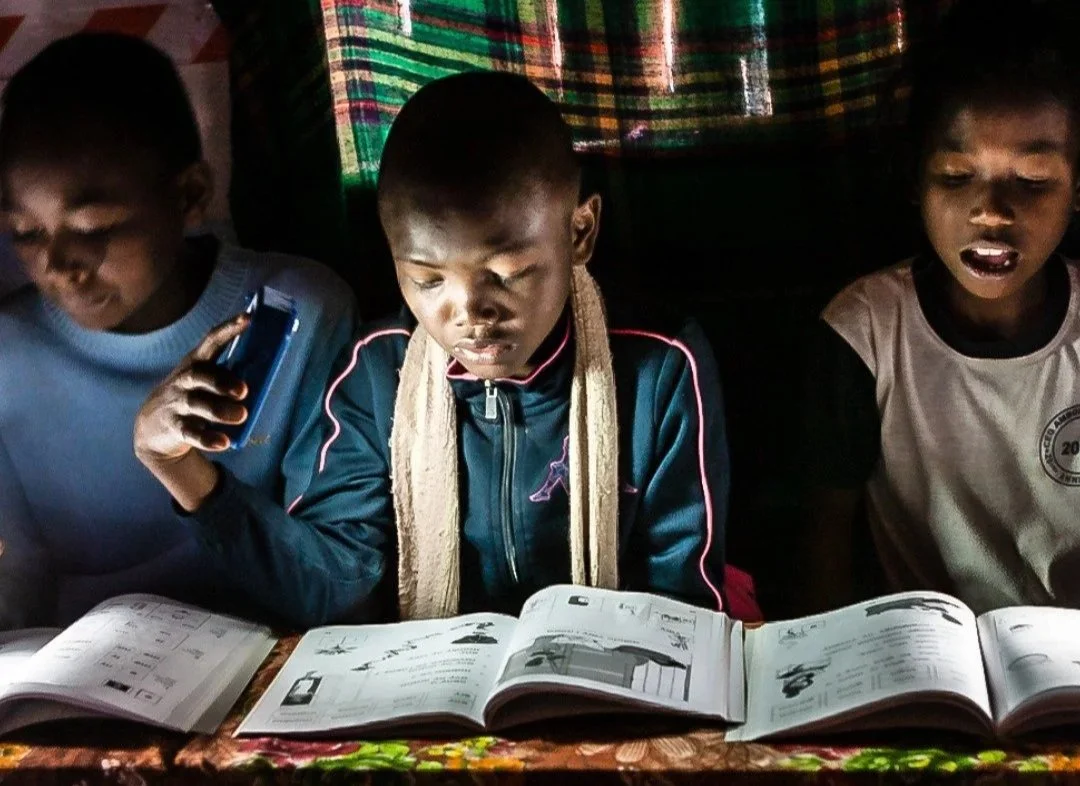
My thinking was that children in the developing world already knew energy poverty; they were living it. They just didn’t have the means to do anything about it. So, we set about improving their learning with the hope that they’ll be able to design the best solutions themselves.
I learned how difficult it was for children to find the time and place to read, how toxic smoke from traditional kerosene lamps was a silent killer, and I knew this was where we needed to start.
Since then, the JuniorBuddy has become synonymous with SolarBuddy. We have delivered houndreds of thousands of these lamps to children in over 50 countries up to this point. But still, when I hear from teachers how children love studying with their ‘buddies’ I’m reminded that learning remains the backbone.
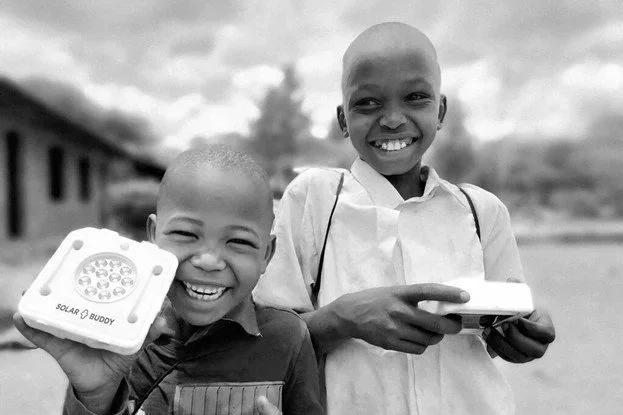
Community-led STEM: youth designing solutions for energy poverty. © SolarBuddy
But we had to go further. So we redesigned the JuniorBuddy and made it into a learning device itself. Students around Australia would assemble them, learn about design and electronics, and get to learn about energy poverty in the process. This has become SolarBuddy STEM.
We needed future engineers to be aware of the challenges and of the social impact that modern, clean technology can have. Today our social STEM classes go beyond Australia, offering the same interactive and purposeful education to children in the developing world.
Last year, Fiji Airways pilots, Air Niugini crew and Airbus engineers assembled these lights alongside children from the Nadi Airport School in Fiji, our biggest in-country solar build to date. Just imagine – getting to learn tech from a pilot! This kind of mentorship was the missing link.
Learning Through Giving: How Corporate Volunteering Creates Dual Impact
As I was sitting there, in the classroom in Fiji, watching a little girl help her friend with that pesky insulation ring (a notoriously tricky part of the JuniorBuddy building process), I was beaming to myself. I couldn’t help but be proud of them, just as I was proud of my own daughter, Luca Doble, for how amazing, brave and inspirational she was.
This feeling was it. Not a hint of frustration, only playfulness and curiosity. Like if a weight suddenly dropped, I could feel that the future holds something great. It’s that dopamine hit you get when kindness leads the way, when you volunteer without expecting anything in return.
This was where true learning was taking place, when curiosity led the way, in a low-stakes, friendly environment. It’s something I wish more people got to experience as often as possible. Offering this opportunity in the form of purpose-led volunteering workshops, with the hope of giving people a glimpse of this feeling, became another corner stone of SolarBuddy’s work.
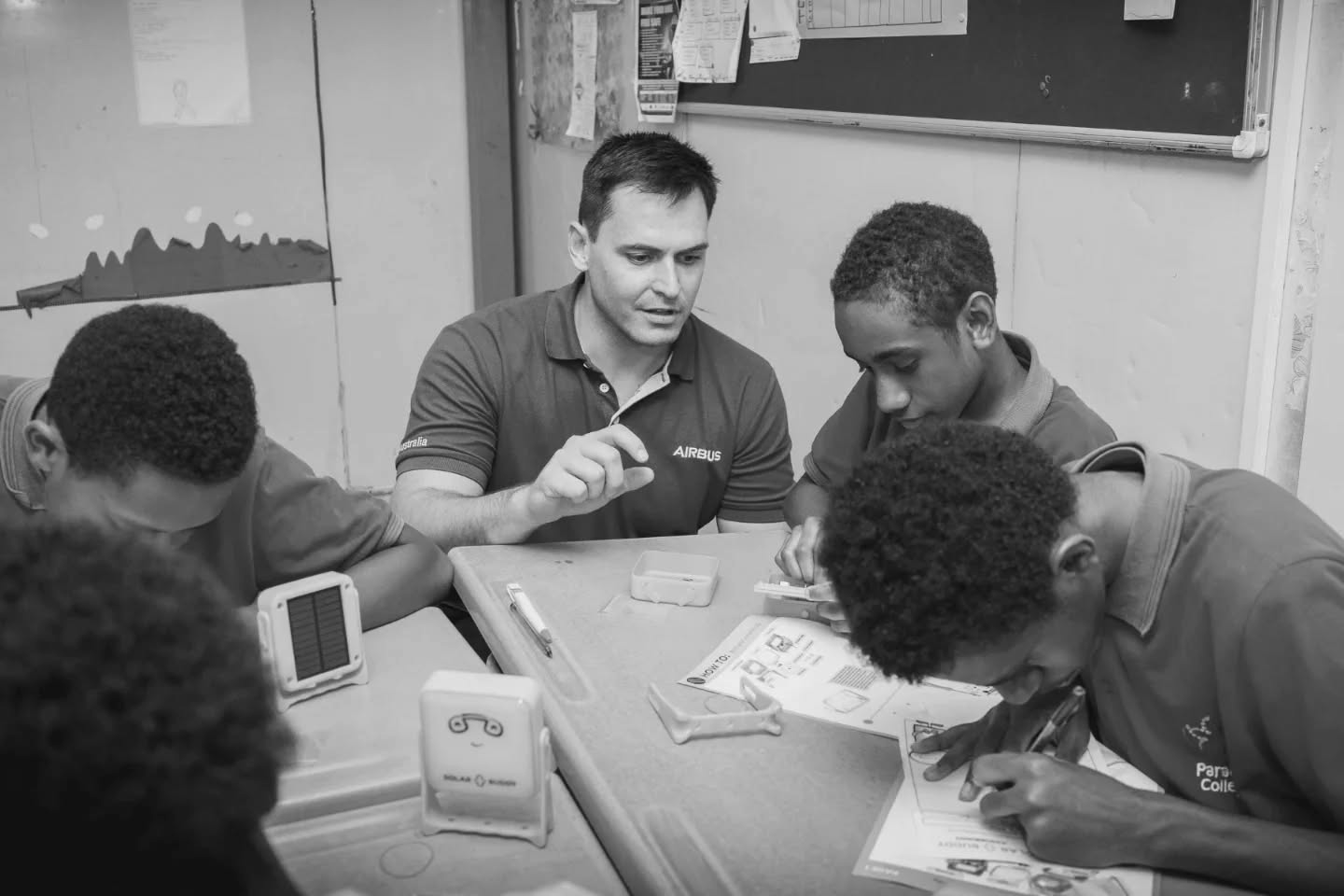
Skills-based volunteering: cross-sector mentorship building tech careers. © SolarBuddy
These workshops eventually grew into SolarBuddy LIVE, a core impact vehicle for us and an incredible springboard towards deeper engagement with corporate partners.
This was a way to stretch our impact further (reaching almost two million people living in energy poverty and gifting over 300,000 solar solutions) but also offer something more. A glimpse of this incredible feeling, a penny drop that will lead some towards kindness and positive impact.
Just as the little girls in Fiji, these people were introduced to a sense of community led by something bigger. And in many cases, as it was for me, you don’t want to go back to that frustration in a strictly controlled performance setting. I couldn’t go back to those conference rooms when I could be here, amongst wonderful people giving back and learning.
Empowering Girls in STEM: The Case for Women Leaders in Tech Impact
A few days after our record solar build I was driving on the Fijian coastal highway, replaying it in my head. Still beaming to myself behind the wheel of a rental car. I still had about two hours to where I was flying from. Roadworks made us go 50 but I didn’t care for a little delay. More time to let everything sink in.
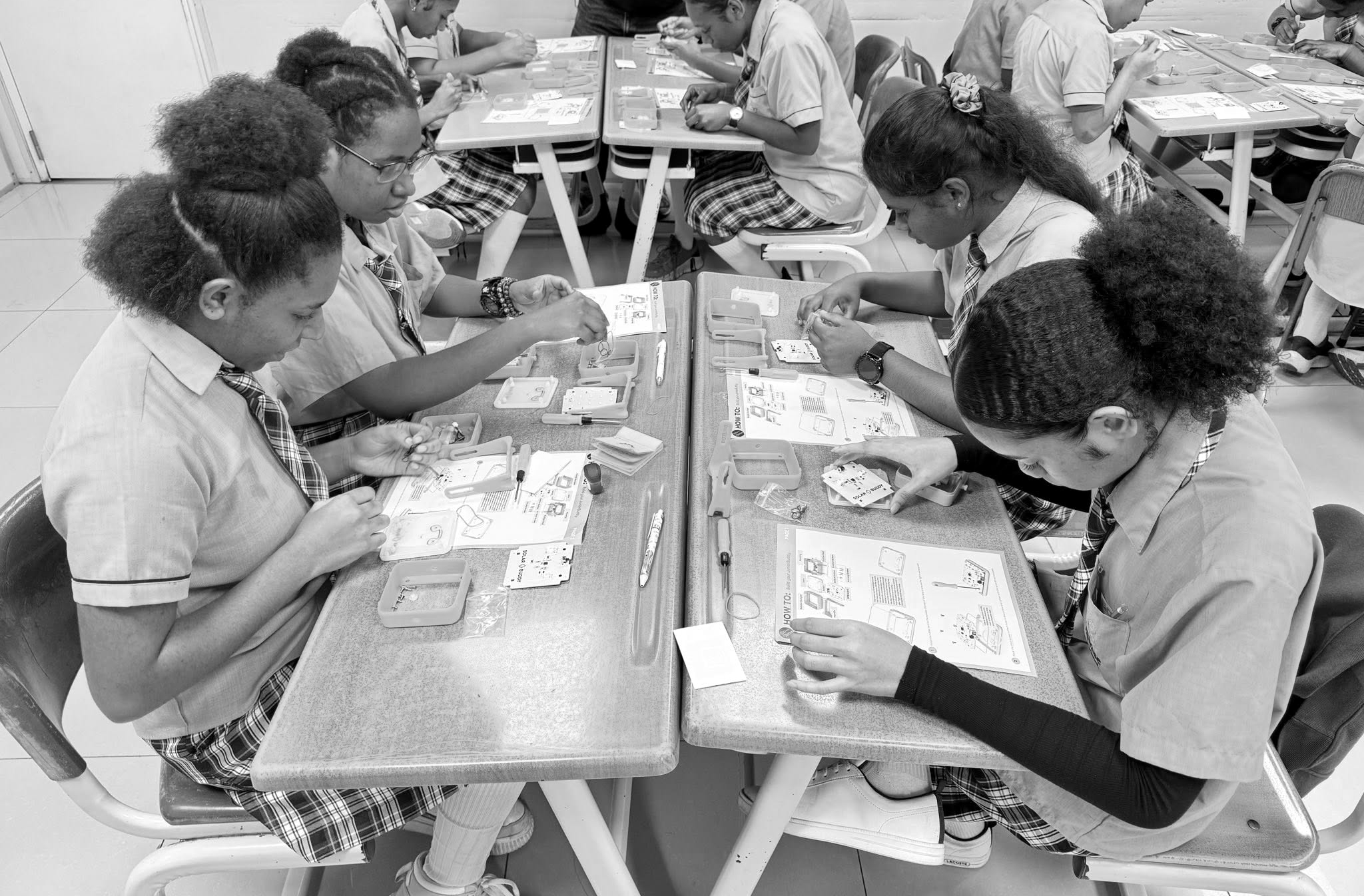
Women in STEM: girls leading renewable energy solutions. © SolarBuddy
I couldn’t help but be proud of all the brave little girls. In many places where SolarBuddy operates, boys get a head start while girls bear the brunt of daily household chores and miss school as a result. In these societies, young men enjoy much better societal and cultural positions than girls.
And this remains true in STEM across the world: it’s still a boys’ club.
But women are needed to lead tech-enabled impact organisations. Research consistently shows that when women hold leadership roles, the focus shifts more toward community welfare, environmental conservation, and sustainable practices.
That’s what led me to fund the latest link in the education to impact chain – LUCA Power. Named after my amazing daughter, it supports girls in developing communities.
We’re taking old solar panels from Australian homes and refurbishing them into solar mini‑grids in remote communities. Power is sold at a reduced rate, supplying homes, schools, libraries and medical centres. And when the solution pays for itself, all the money goes towards a scholarship fund that sends local girls to university to pursue tech careers.
With LUCA Power, we’re providing local charities and NGOs with a sustainable income, engaging skilled veterans and volunteers to oversee the installation, and prioritise training the local community for maintenance, management and security. All crucial aspects that are in line with our philosophy of small footprint, big impact. Still, all I could think about was whether any of the talented girls would go on to become an engineer or found a social enterprise that would put another dent in energy poverty.
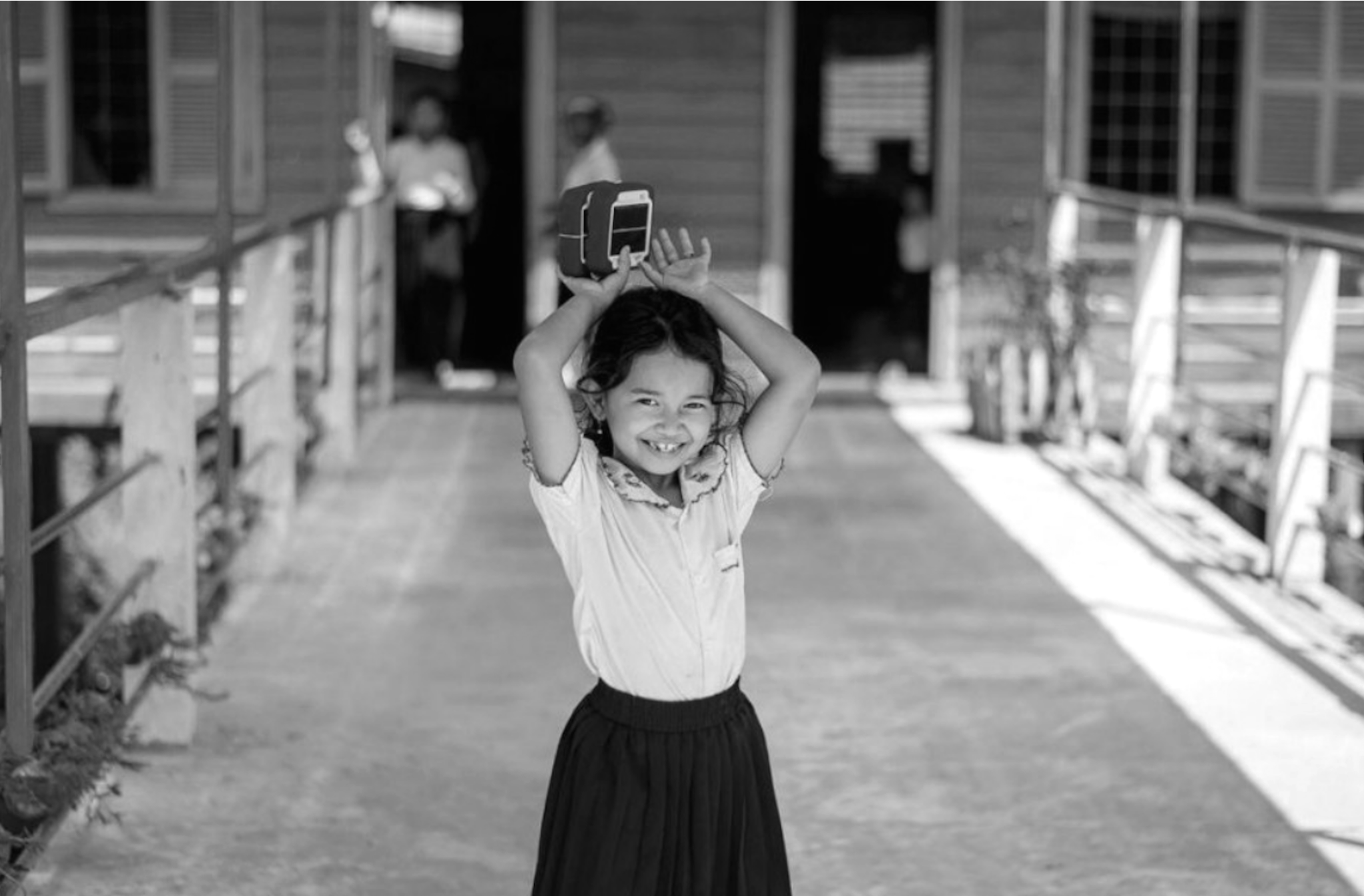
Systemic change: girls empowered through sustainable energy access. © SolarBuddy
Scaling Impact: How Community Strength Powers Systemic Change
Solving energy poverty will be incredibly complex, but as a society we’re constantly achieving what we once deemed impossible.
In 2009, the International Energy Agency predicted that we would hit 240 GW of installed solar capacity by 2030; we hit it by 2015. By 2022, we hit the first terawatt of solar power. The second terawatt came only two years later. That’s exponential growth.
In 2023 new power connections outpaced population growth, connecting 19 million more people with decentralised renewables like off‑grid solar, which served 561 million people globally. In places like Pakistan, you can see the solar transition from space. Some areas have over 90% of farms running on solar instead of diesel, pushing down emissions and hedging against fuel supply uncertainty.
That’s the power of this amazing innovation community.
The underlying ecosystem capable of solving energy poverty is beginning to emerge. And whether it is learning through action with volunteering, or social STEM classes shaping tomorrow’s leaders, education is going to be the key force for this community to grow. ●